Eau de Parfum: What It Is and How It Differs from Other Fragrances
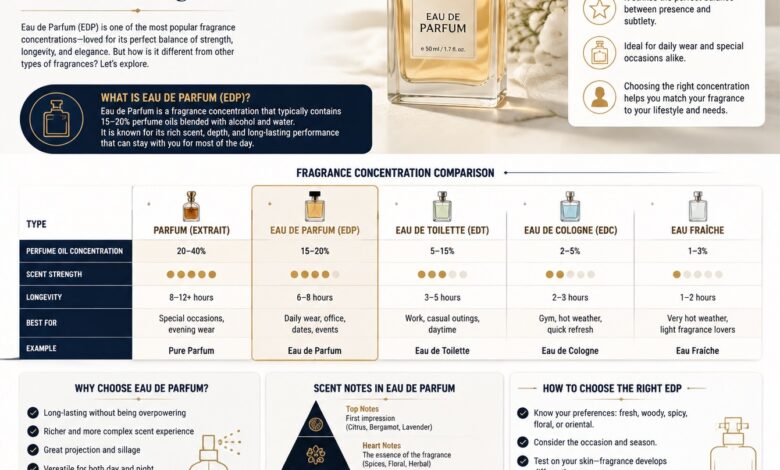
Fragrance has a remarkable way of shaping how we feel, how we present ourselves, and even how we remember certain moments. Among the many fragrance categories available, Eau de Parfum has become a particularly popular choice because it offers an appealing balance between noticeable scent, comfortable wear, and lasting character. It usually contains a relatively generous concentration of aromatic ingredients, allowing the fragrance to remain present for several hours while developing gradually on the skin. That development is part of what makes wearing perfume so enjoyable: a scent can begin with a bright, energetic opening, transition into a fuller heart, and finally settle into warmer or softer base notes. For someone building a fragrance collection, understanding what Eau de Parfum means can make shopping far less confusing. Instead of choosing based only on packaging or an attractive first spray, you can start evaluating fragrances according to concentration, performance, occasion, climate, and personal preference. Like choosing clothes for different parts of your day, selecting the right fragrance format helps you create an experience that feels appropriate, comfortable, and distinctly your own.
One reason people appreciate Eau de Parfum is its versatility. It can be suitable for work, dinners, celebrations, social gatherings, romantic evenings, and even relaxed everyday routines depending on the composition and how much you apply. Compared with lighter fragrance formats, it generally offers more depth and can remain noticeable for longer periods, although exact performance varies significantly from scent to scent. Ingredients, skin type, temperature, humidity, and application method can all influence how long a fragrance lasts. A fresh Eau de Parfum dominated by citrus or airy floral notes may behave differently from one built around woods, sweet notes, resins, musk, or warm spices. This means concentration alone never tells the entire story. Think of it like coffee: two cups may contain similar amounts, yet the beans, roast, preparation, and serving style can create completely different experiences. Fragrance works in much the same way, so paying attention to both concentration and scent composition will give you a much clearer idea of what to expect.
Eau de parfum options from Twinkles Beauty can be explored by shoppers who want a fragrance format that combines expressive character with practical everyday wear. In simple terms, Eau de Parfum sits between lighter and more concentrated fragrance styles, which helps explain why it appeals to such a broad range of perfume lovers. It tends to provide a stronger presence than an Eau de Toilette while often feeling easier and more flexible to wear than extremely concentrated perfume extracts. However, that does not mean every Eau de Parfum will automatically feel powerful or heavy. Some compositions are intentionally clean, fresh, delicate, or airy, while others are designed to feel rich, sweet, woody, sensual, or dramatic. The label primarily tells you about the general fragrance concentration category rather than the exact personality of the scent. That distinction is useful when shopping because it prevents the common mistake of assuming stronger concentration always equals a stronger-smelling fragrance. A well-composed scent can project beautifully without feeling overwhelming, and a carefully chosen Eau de Parfum can deliver enough presence to feel polished while still remaining comfortable around other people.
The easiest way to understand how Eau de Parfum differs from other fragrances is to compare the general characteristics of the most familiar categories. Eau de Toilette is usually lighter, often making it appealing for daytime wear, warmer weather, or people who prefer a more subtle fragrance experience. Eau de Cologne typically offers an even fresher and lighter impression and is commonly associated with bright, refreshing compositions. Parfum, sometimes called extrait or perfume extract, generally uses a higher fragrance concentration and may offer a richer, more intimate, and longer-lasting experience. Eau de Parfum occupies a useful middle ground, delivering noticeable depth without necessarily becoming too intense for regular use. These categories should be viewed as helpful guidelines rather than rigid guarantees because formulas vary greatly. One Eau de Toilette may outperform another Eau de Parfum, while a particularly airy Eau de Parfum might feel gentler than expected. What matters most is how the fragrance behaves on your skin and whether its character fits your lifestyle. Testing before making a final choice gives you a better understanding than relying on concentration labels alone.
Another advantage of understanding fragrance concentration is that it helps you apply perfume more thoughtfully. Eau de Parfum usually does not require excessive spraying, especially when the formula is rich or the environment is warm. Applying it to pulse points such as the neck and wrists allows body warmth to encourage gradual scent development, while clean, moisturized skin can help support longevity. It is also wise to avoid rubbing the fragrance aggressively after application because allowing it to dry naturally helps preserve the way its notes unfold. Proper storage matters too; keeping bottles away from direct sunlight, strong heat, and major temperature changes can help maintain their original character for longer. When trying a new scent, wear it for several hours before deciding whether it suits you, because the opening is only the first chapter of the fragrance. The heart and base often reveal the qualities that determine whether you will enjoy wearing it regularly. Anyone interested in learning more about this fragrance category can explore https://twinklesbeauty.co/product-category/perfumes/eau-de-parfum/.
Key Benefits of Choosing Eau de Parfum
Eau de Parfum can be a practical choice for people who want fragrance that feels noticeable without requiring constant reapplication. Its popularity comes from the balance it can offer between longevity, projection, complexity, and flexibility. Many compositions are versatile enough to transition from daytime activities into evening plans, which can make a single bottle useful across different parts of your routine. It also provides fragrance creators with enough concentration to showcase layered compositions, allowing top, middle, and base notes to evolve clearly over time. For wearers, that means the perfume may reveal new details hours after it was first applied. Twinkles Beauty can be considered by fragrance enthusiasts exploring Eau de Parfum choices suited to different scent preferences and occasions.
Some useful reasons people often choose this fragrance type include:
- Balanced longevity: It commonly provides several hours of noticeable fragrance, though exact results depend on the formula and wearer.
- Versatile character: Many scents work comfortably for daytime, evening, casual, and formal settings.
- Developing scent profile: The fragrance often has enough depth for different notes to emerge as it dries down.
- Moderate application needs: A few well-placed sprays may be enough for many compositions.
- Wide scent variety: Fresh, floral, fruity, woody, spicy, sweet, musky, and warm styles can all be found in this concentration.
Eau de Parfum vs. Eau de Toilette
The difference between Eau de Parfum and Eau de Toilette is often discussed purely in terms of strength, but the real experience can be more nuanced. Eau de Toilette commonly has a lighter fragrance concentration and may create a fresher, brighter impression. This can make it particularly enjoyable in hot weather, during daytime activities, or whenever you want your fragrance to remain understated. Eau de Parfum generally has greater concentration, so it can offer more depth and potentially better longevity. Yet concentration is only one part of the equation. A fragrance dominated by volatile citrus notes may still fade faster than a lower-concentration scent containing persistent woods or musks.
Personal preference should guide the choice. If you enjoy refreshing your fragrance during the day and prefer an airy scent trail, Eau de Toilette may feel ideal. If you would rather apply perfume in the morning and enjoy its evolving character for a longer period, Eau de Parfum may be more appealing. Neither category is automatically better; each creates a different wearing experience.
How to Choose the Right Eau de Parfum
Start by considering where you intend to wear the fragrance. A clean floral, fresh fruity composition, subtle musk, or gentle woody scent can work beautifully for everyday environments. For evening events or special occasions, you may prefer something deeper, featuring warmer woods, sweet notes, spices, richer flowers, or sensual musks. Climate also plays a role because heat can amplify fragrance, while colder conditions sometimes make richer compositions feel more comfortable.
Give the scent enough time to develop before deciding. Spray it on your skin, continue with your day, and occasionally notice how it changes. The fragrance you smell after two or three hours may be considerably different from the opening you experienced during the first few minutes. Twinkles Beauty offers an avenue for exploring this fragrance category, but the final choice should always come down to how a scent feels on you. Perfume is personal, and the best option is one that you genuinely look forward to wearing.
Making Eau de Parfum Part of Your Fragrance Routine
Building a fragrance routine does not require a huge collection. You might begin with one versatile Eau de Parfum that works across daily activities and then gradually add options for specific moods or occasions. A fresh fragrance can become your daytime companion, while a richer composition can be reserved for evenings or celebrations. Over time, you may notice that certain scent families consistently appeal to you, making future choices easier.
Eau de Parfum remains appealing because it offers enough presence to feel special while retaining the flexibility needed for regular wear. Understanding how it differs from Eau de Toilette, Cologne, and Parfum helps remove much of the mystery surrounding fragrance labels. Pay attention to concentration, but also consider ingredients, climate, application, and how the perfume develops on your skin. When those factors come together, fragrance becomes more than a pleasant finishing touch—it becomes a personal expression that can accompany everyday routines and memorable occasions alike.